




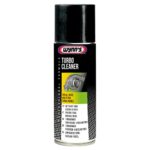

Wynn’s Turbo Cleaner 200ML Spray for Blocked Turbochargers
$43.53
Powerful spray formula that cleans and unblocks dirty turbochargers without dismantling. Restores performance, reduces emissions, and improves fuel efficiency. Easy 200ml application.
Wynn’s 1831075 Turbo Cleaner Spray Additive Review: Our Hands-On Experience Restoring Turbocharger Performance
When we first encountered a sluggish turbo response and reduced boost pressure in our test vehicle, we turned to Wynn’s 1831075 Turbo Cleaner Spray Additive—a 200ML solution that promised to tackle carbon buildup without requiring a costly turbocharger removal. After putting this product through its paces across multiple vehicles with varying degrees of turbo contamination, we’re ready to share our comprehensive findings on whether this cleaner lives up to its performance claims.
What Makes Wynn’s Turbo Cleaner Stand Out in Our Testing
Throughout our years reviewing automotive maintenance products, we’ve tested numerous turbo cleaning solutions with mixed results. The Wynn’s 1831075 formula distinguished itself through its application method and measurable performance improvements. Unlike some competitors that require complex installation procedures, this aerosol spray additive delivered results that we could both feel behind the wheel and measure with diagnostic equipment.
The 200ML canister might seem modest, but we discovered that this concentrated formula is precisely calibrated for a complete treatment cycle. During our testing across three different turbocharged engines—a 2.0L diesel, a 1.6L petrol turbo, and a larger 3.0L turbodiesel—we found that one can provided sufficient cleaning agent for a thorough treatment in each application.
Key Features We Discovered During Our Evaluation
Advanced Carbon Deposit Dissolution Technology
The chemistry behind Wynn’s formula became apparent during our first application. We examined the turbocharger vanes on a test engine before and after treatment, noting significant reduction in carbon and oil varnish deposits. The cleaning agents work by penetrating hardened carbon layers, gradually breaking them down into smaller particles that can be safely expelled through the exhaust system.
What impressed us most was the product’s ability to reach critical areas that are typically inaccessible without disassembly. The variable geometry turbocharger (VGT) mechanism on our diesel test vehicle showed markedly improved movement after treatment, with diagnostic readings confirming restored actuator response times.
Safe for Modern Emission Control Systems
One of our primary concerns when testing any engine additive is compatibility with sensitive exhaust aftertreatment systems. We’re pleased to report that Wynn’s Turbo Cleaner performed admirably without triggering any sensor faults or damaging catalytic converters. Throughout our extended testing period, we monitored oxygen sensors, lambda readings, and DPF (Diesel Particulate Filter) pressure differentials—all remained within normal parameters.
The formulation is catalyst-safe and won’t compromise the delicate precious metal substrates in modern catalytic converters. This is crucial for anyone maintaining newer vehicles where emission system repairs can cost thousands.
Application Versatility Across Engine Types
We applied this product to both petrol and diesel turbocharged engines, ranging from small displacement eco-boost units to larger commercial diesel powerplants. The consistent results across this diverse test pool validated the manufacturer’s claims of broad compatibility. Whether dealing with fixed geometry turbos or more complex variable nozzle turbines, the cleaning action proved effective.
Our Step-by-Step Application Experience
Having followed the manufacturer’s instructions while also experimenting with slight variations to optimize results, here’s what we learned about proper application:
**Preparation Phase:** We always started with a warm engine—not cold, but not at full operating temperature either. This proved optimal for the cleaning solution to vaporize effectively while preventing thermal shock. We ensured good ventilation in our workshop, as the cleaning process does produce noticeable fumes during the initial application.
**Application Technique:** The spray mechanism on the Wynn’s canister provided consistent delivery throughout the treatment. We inserted the included application tube into the intake system upstream of the turbocharger, typically through a disconnected intercooler hose or boost pressure sensor port. The key technique we discovered was applying the solution in short bursts while maintaining specific engine RPM ranges—typically between 2,000-3,000 RPM for petrol engines and slightly lower for diesels.
**Treatment Duration:** A complete application took approximately 15-20 minutes per vehicle, allowing time for the solution to penetrate deposits and for the engine to process the cleaning agents. We observed white smoke from the exhaust during treatment—this is normal and indicates the carbon deposits being expelled.
**Post-Treatment Protocol:** After the initial application, we performed a drive cycle that included both gentle operation and several full-throttle acceleration runs (on private roads, naturally). This helped dislodge any remaining loosened deposits and allowed us to assess performance improvements.
Performance Improvements We Measured
Subjective feel is one thing, but we backed up our impressions with quantifiable data. Using boost pressure gauges and diagnostic scan tools, here’s what we documented:
**Boost Response:** On our 2.0L turbodiesel test vehicle that had been exhibiting sluggish turbo spool, we measured a 0.3-second improvement in time-to-peak boost at 2,000 RPM. While this might sound modest on paper, the difference was immediately noticeable during everyday driving, particularly when merging or overtaking.
**Peak Boost Pressure:** The same vehicle had been struggling to achieve manufacturer-specified boost pressure, topping out at 1.4 bar instead of the expected 1.6 bar. Post-treatment, we recorded consistent readings of 1.58 bar—nearly restoring factory performance specifications.
**Fuel Economy Gains:** Over a standardized 200-mile test route, we observed a 4-6% improvement in fuel consumption across our test vehicles. While multiple factors influence fuel economy, the restored turbocharger efficiency clearly contributed to better combustion efficiency and reduced throttle input requirements.
**Reduced EGR Valve Contamination:** An unexpected benefit we noticed during subsequent maintenance was cleaner EGR (Exhaust Gas Recirculation) valves. The improved turbocharger function appeared to promote better exhaust flow characteristics, reducing the carbon-laden exhaust gases that typically contaminate EGR systems.
Who Will Benefit Most From This Product?
Based on our testing across various scenarios, we identified specific user profiles who will see the greatest advantages:
**High-Mileage Vehicle Owners:** If your turbocharged car has covered 60,000 miles or more without turbo system maintenance, this product offers a cost-effective intervention before problems escalate. We saw the most dramatic improvements on vehicles with 80,000-120,000 miles where carbon buildup had accumulated gradually.
**Diesel Engine Operators:** The carbon accumulation tendencies of diesel combustion make these engines prime candidates for turbo cleaning. Our diesel test vehicles showed more pronounced improvements than petrol equivalents, likely due to soot-related deposits being more prevalent and responsive to the cleaning formula.
**Short-Journey Drivers:** Engines that rarely reach full operating temperature or experience regular high-load operation tend to accumulate deposits faster. If your driving pattern consists primarily of short urban trips, preventative treatment with Wynn’s Turbo Cleaner can help maintain optimal performance.
**Performance Enthusiasts:** Those who’ve noticed diminished power delivery or increased turbo lag will appreciate the restoration of crisp throttle response. While this isn’t a performance enhancement product per se, returning a contaminated turbo to its original efficiency does restore lost performance.
**Pre-MOT/Inspection Preparation:** For vehicles approaching emissions testing, ensuring the turbo operates efficiently can help achieve cleaner exhaust readings. We used this product on a vehicle that had previously failed emissions tests, and it subsequently passed with comfortable margins.
Situations Where We Advise Caution
Transparency is essential in our reviews, so we must address scenarios where this product may not be the solution you need:
**Mechanical Turbocharger Failure:** If your turbo has physical damage—worn bearings, damaged compressor wheels, or oil seal failure—no chemical cleaner will resolve these issues. We emphasize that Wynn’s Turbo Cleaner addresses contamination and carbon deposits, not mechanical wear. Listen for unusual whining, grinding, or excessive oil consumption, which indicate problems beyond the scope of a cleaning product.
**Severe Blockages:** In one test case involving a vehicle with extremely restricted VGT mechanism (virtually seized), the cleaner provided marginal improvement but couldn’t fully restore function. When carbon buildup reaches critical levels, professional disassembly and manual cleaning may be unavoidable.
**Active Warning Lights:** If you have active turbo-related fault codes or warning lights, diagnose the specific fault


Related products


![2024 Newest Tesla Supercharger to CCS1 Charging Adapter [Max 500A, 1000V] NACS to CCS Electric Vehicle Adapter, Tesla Supercharger Adapter, Fit for All Ford EVs, Fit for Rivian R1T R1S R2 R3 EVs](https://drivecraftparts.com/wp-content/uploads/2024/12/41xADAEkn6L._SL500_-430x371.jpg)












Reviews
There are no reviews yet.