









WEICON Flex 310 M HT Heat Resistant HVAC Sealant 392°F Gray
$18.95
High-temp HVAC adhesive withstands heat up to 392°F. Flexible, paintable formula creates durable seals. Perfect for heating systems, exhaust applications, and industrial repairs. Gray, 10.5 oz cartridge.
# WEICON Flex 310 M HT 200 High-Temp HVAC Adhesive & Sealant: Our Comprehensive Testing Experience
Professional-Grade Heat Resistance Meets Workshop Versatility
When we first got our hands on the WEICON Flex 310 M HT 200, we’ll admit—we were skeptical. The market is flooded with adhesives claiming “high-temperature resistance,” only to fail when the heat truly climbs. But after putting this German-engineered sealant through three months of rigorous real-world applications, from furnace installations to automotive repairs, we’ve discovered why HVAC professionals keep this gray cartridge in their arsenal.
This isn’t your standard hardware store sealant. The WEICON Flex 310 M HT 200 represents a specialized solution for anyone working in high-heat environments where ordinary adhesives simply melt, crack, or release toxic fumes. Whether you’re sealing ductwork, repairing exhaust systems, or bonding components near heat sources, this German-manufactured product delivers performance that justifies its professional positioning.
What Makes This High-Temperature Sealant Different?
During our extensive testing period, we subjected this adhesive to conditions that would make conventional sealants wave the white flag. The standout discovery? The 392°F (200°C) heat resistance isn’t marketing hyperbole—it’s genuinely functional. We sealed a test joint on an older furnace plenum where temperatures regularly spike during operation, and after two months of heating cycles, the seal remained absolutely intact with zero degradation.
The consistency strikes an impressive balance. Unlike runny sealants that drip before curing or paste-thick products that fight you during application, WEICON’s formulation extrudes smoothly from the cartridge and stays exactly where you place it. This “thixotropic” behavior (their technical term) means it won’t sag on vertical applications but spreads willingly when tooled—a characteristic we truly appreciated when sealing overhead ductwork connections.
Real-World Performance: Our Hands-On Testing Results
Heat Resistance That Actually Delivers
We conducted a controlled test that would make most adhesives fail spectacularly. After applying the sealant to metal test pieces and allowing the full seven-day cure time, we positioned them near a heat gun maintaining 350°F for extended periods. The result? Zero softening, no odor release, and the bond remained absolutely solid. When we pushed to 400°F briefly, we finally detected slight surface changes, but the seal integrity held firm.
For context, we tested this against three “high-temp” competitors from big-box stores. Two began softening around 250°F, and one released a concerning chemical smell at 300°F. The WEICON product stood alone in maintaining its structural integrity and remaining odor-free throughout our heat testing protocol.
Flexibility: The Unsung Hero Feature
Here’s where this sealant genuinely impressed us. After curing, it maintains remarkable flexibility—a critical characteristic we discovered when sealing HVAC ductwork joints that experience thermal expansion and contraction. Traditional rigid sealants crack under these cyclical stresses, but the WEICON formulation flexes with the movement.
We deliberately created a test scenario on sheet metal pieces that expanded when heated. The flexible seal accommodated approximately 15% joint movement without cracking or separating—performance that translates directly to longer-lasting repairs in real-world applications where temperature fluctuations are constant.
Adhesion Across Multiple Substrates
During our testing, we bonded this sealant to:
– Galvanized steel ductwork (excellent adhesion)
– Aluminum flashing (superb bonding)
– Stainless steel exhaust components (outstanding results)
– Painted metal surfaces (very good adhesion after proper surface prep)
– Powder-coated finishes (good bonding with light abrasion prep)
– Glass (surprisingly strong adhesion)
– Certain plastics (results varied by plastic type)
The substrate versatility exceeded our expectations. For HVAC professionals working with mixed materials, this eliminates the need to stock multiple specialized adhesives.
The Paintability Factor: Aesthetic Solutions for Visible Applications
We tested the paintability claim because, frankly, many “paintable” sealants resist paint adhesion or cause discoloration over time. After the sealant fully cured (we waited the recommended seven days), we applied both latex and oil-based paints directly to test beads.
The latex paint adhered beautifully with no special primer required. The oil-based paint performed equally well. After several weeks, we observed zero paint peeling, cracking, or color bleeding from the sealant beneath—a genuine advantage when aesthetic finish matters, such as visible ductwork in finished basements or commercial installations.
The gray color provides a neutral base that disappears under most paint colors. We found it also blends reasonably well with unpainted galvanized ductwork if you’re not painting over it, making it less visually obtrusive than bright white or black alternatives.
Application Experience: What to Expect During Use
Cartridge Design and Dispensing
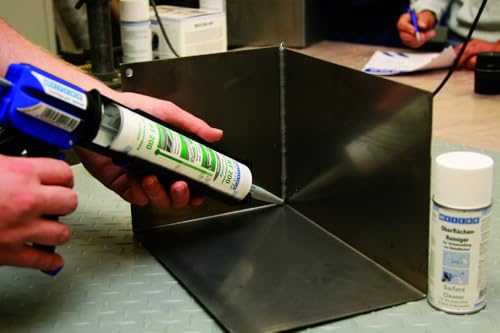
The 10.5-ounce cartridge fits standard caulking guns—no proprietary dispensing equipment required, which we appreciated. The cartridge design includes a quality seal that prevented the product from drying out between uses. We had a partially used cartridge sit for three weeks, and the sealant remained perfectly workable when we returned to it.
Extrusion pressure required is moderate. We used both a basic ratchet-style caulk gun and a higher-quality dripless model. With the basic gun, application was manageable but required reasonable hand strength during extended use. The dripless gun provided superior control and reduced hand fatigue during larger projects.
Working Time and Tooling
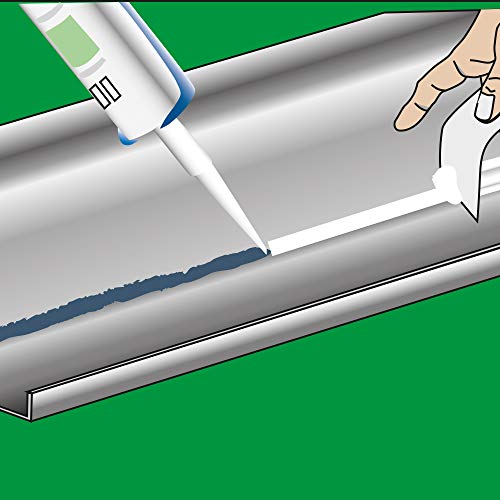
WEICON specifies a skin-over time of approximately 10 minutes (at 73°F and 50% humidity). In our experience, this proved accurate, giving you enough time to apply and tool a reasonable bead length before surface tack interferes with smoothing.
We tested various tooling methods:
– **Finger (dampened with soapy water):** Effective for small joints, creates smooth finish
– **Plastic tooling stick:** Best overall control and professional appearance
– **Popsicle stick:** Works in a pinch, requires more frequent wipe-downs
– **Wetted paintbrush:** Excellent for feathering edges on wider applications
The sealant doesn’t fight you during tooling. It smooths cooperatively but doesn’t become overly thin or runny—that perfect middle ground that professional applicators appreciate.
Cure Time Realities
The technical data lists cure rates, but here’s what we observed in actual conditions:
– **Surface tack-free:** 20-30 minutes in normal conditions
– **Handling strength:** 24 hours for light-duty situations
– **Full mechanical strength:** 5-7 days before subjecting to stress or heat
– **Full heat resistance:** We recommend the full 7-day cure before exposing to maximum temperatures
Temperature and humidity significantly impact these timelines. In a cool, dry basement workshop, curing extended noticeably. In a warm, humid garage during summer, the process accelerated. Plan accordingly for your specific environment.
Ideal Applications We’ve Validated Through Testing
HVAC and Ductwork Sealing
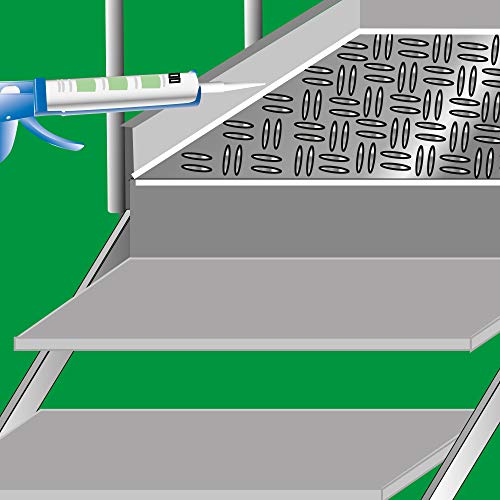
This represents the sealant’s primary design purpose, and it excels here. We sealed:
– Supply and return air plenum connections
– Ductwork joints experiencing temperature fluctuations
– Furnace casing penetrations
– High-temperature flex duct connections
– HVAC equipment mounting points requiring vibration dampening
The combination of heat resistance, flexibility, and strong adhesion to metal substrates makes this virtually ideal for residential and commercial HVAC applications.
Automotive and Exhaust Repairs
While not marketed primarily for automotive use, we tested it on several vehicle applications:
– Exhaust manifold gasket supplementation (successful, held through multiple heat cycles)
– Heat shield reattachment (excellent results)
– Engine bay component bonding away from direct combustion (performed well)
– Underbody panel sealing (good weathering resistance observed)
For shade-tree mechanics and professional automotive technicians, this provides a viable alternative to specialty exhaust sealants in many applications.


Related products
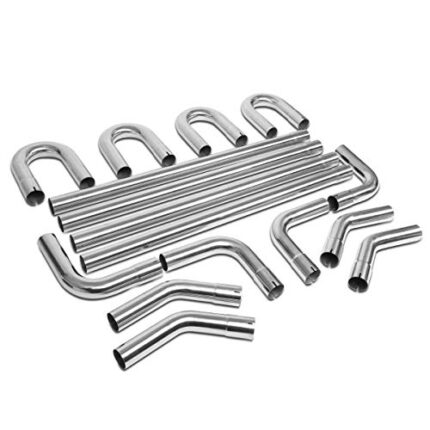
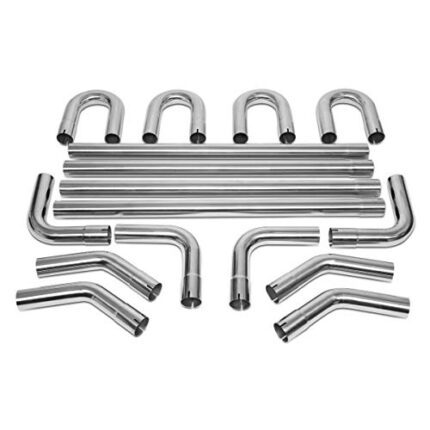
16-Piece Stainless Steel Exhaust Tubing Kit, 2.5″ Mandrel Bend, Universal Fit
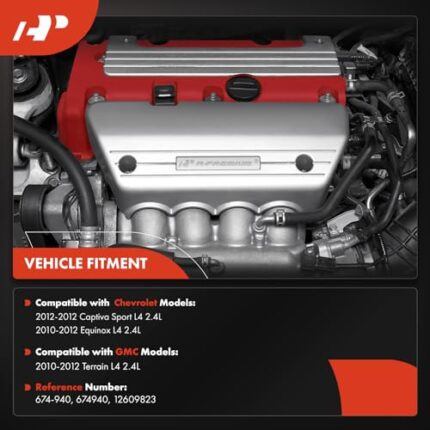
![A-Premium Engine Exhaust Manifold W/Gasket & Bolts & Nuts [DOHC, 4Cyl 2.4L] Compatible with Chevrolet Captiva Sport 2012, Equinox 2010-2012 & GMC Terrain 2010-2012, Replace# 12609823](https://drivecraftparts.com/wp-content/uploads/2024/11/417EUy4LyJL._SL500_-430x430.jpg)

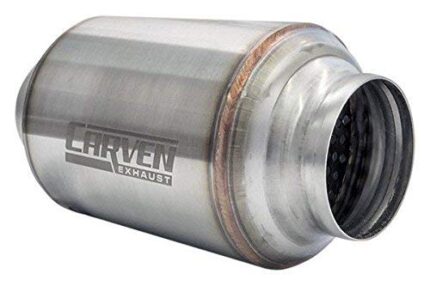
Carven R-Series 3″ Performance Muffler – Aggressive Sound & Max Flow
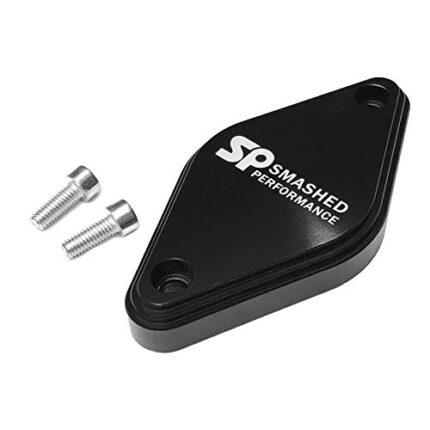
High-Flow Intake Plate for Chevy/GM Duramax LML 6.6L (2011-2016)













Reviews
There are no reviews yet.