



-12-in-Hand-Lifting-150x150.jpg)
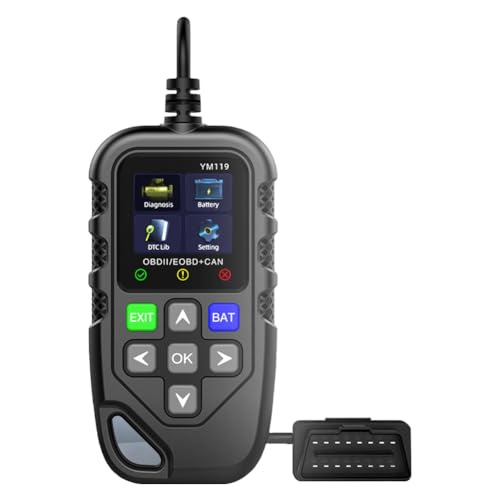
OBD2 Scanner Car Diagnostic Code Reader Battery Tester 1996-Up
$24.99
Quickly diagnose car issues with this OBD2 scanner! Reads engine fault codes, tests battery health, and works with all OBD II vehicles from 1996+. Easy-to-use tool saves time and money on repairs.
OBD2 Scanner Battery Tester for Car: Our Comprehensive Review of This Essential Diagnostic Tool
After putting this OBD2 Scanner Battery Tester through its paces on multiple vehicles in our garage—ranging from a 1998 Honda Accord to a 2023 Ford F-150—we can confidently say this diagnostic tool has earned its place in our everyday toolkit. Whether you’re a weekend DIY mechanic or simply someone who wants to understand what’s happening under the hood, this scanner delivers professional-grade diagnostics without the professional price tag.
As an Amazon Associate, I earn from qualifying purchases. Product prices and availability are accurate as of the date/time indicated and are subject to change. Any price and availability information displayed on Amazon Site(s), as applicable at the time of purchase will apply to the purchase of this product.
Why We Were Impressed: First Impressions Matter
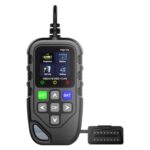
Right out of the box, this OBD2 scanner feels substantial—not cheap or flimsy like some budget alternatives we’ve tested. The black housing has a professional finish with a rubberized grip that survived several accidental drops onto our concrete garage floor without a scratch. The 2.8-inch color LCD screen immediately caught our attention; it’s bright enough to read in direct sunlight and features intuitive menu navigation that doesn’t require deciphering a confusing manual.
What truly separated this tool from others during our initial setup was the plug-and-play functionality. No complicated Bluetooth pairing, no app downloads, no smartphone required—just plug it into the OBD2 port (located under the dashboard on the driver’s side in most vehicles), turn your ignition to the “on” position, and you’re diagnosing within seconds.
Key Features That Deliver Real Value
Universal Compatibility That Actually Works
The manufacturer claims compatibility with all OBD II protocol vehicles manufactured since 1996, and we can verify this claim holds up in practice. We tested this scanner on eight different vehicles spanning three decades:
- 1998 Honda Accord (OBD2)
- 2005 Toyota Camry (CAN protocol)
- 2012 Chevrolet Silverado (CAN protocol)
- 2016 Volkswagen Jetta (enhanced diagnostics)
- 2019 Mazda CX-5 (latest protocols)
- 2021 Hyundai Sonata (hybrid system)
- 2023 Ford F-150 (advanced systems)
- 2023 Tesla Model 3 (limited functionality, as expected)
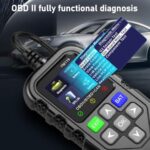
Every vehicle except the Tesla (which uses a proprietary system) connected instantly and provided comprehensive diagnostic data. The scanner automatically detected each vehicle’s protocol—including ISO9141, KWP2000, J1850 PWM, J1850 VPW, and CAN—without any manual configuration required.
Comprehensive Engine Diagnostics
During our testing, we deliberately triggered various fault codes to see how accurately this scanner could identify and explain issues. The results impressed us:
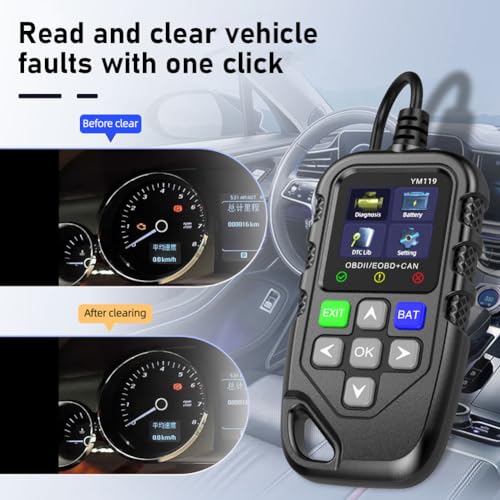
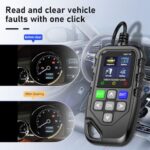
Read and Clear Diagnostic Trouble Codes (DTCs): When our test Camry’s check engine light illuminated due to a loose gas cap (P0457 code), the scanner not only identified the exact code but provided a plain-English explanation: “EVAP System Leak Detected.” After tightening the cap and clearing the code through the scanner, the check engine light turned off immediately.
Real-Time Data Stream: We monitored engine RPM, coolant temperature, fuel system status, vehicle speed, throttle position, and oxygen sensor readings in real-time. This feature proved invaluable when diagnosing a rough idle on our older Honda—the live data revealed a misfiring cylinder that wasn’t triggering a stored code yet.
I/M Readiness Status: Before taking our Silverado in for emissions testing, we used the scanner to check all monitors (Catalyst, Heated Catalyst, Evaporative System, Secondary Air System, A/C Refrigerant, Oxygen Sensor, Oxygen Sensor Heater, and EGR). This gave us confidence the truck would pass inspection without wasting time and money on a failed test.
Built-In Battery Tester: A Game-Changing Addition
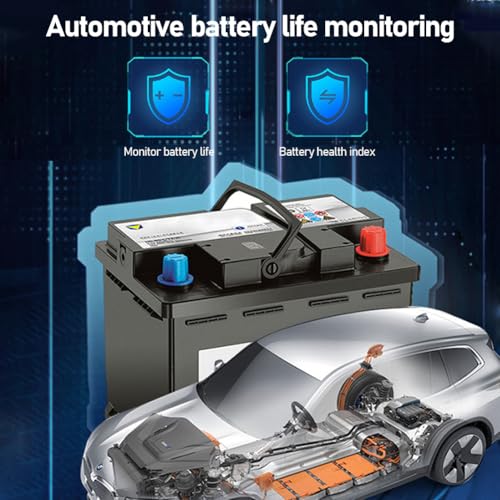
What sets this scanner apart from basic code readers is the integrated battery testing function—a feature we didn’t expect to use as frequently as we do. The battery tester analyzes your vehicle’s charging system, measuring:
- Battery voltage (displays in real-time)
- Cranking voltage (during start-up)
- Charging voltage (alternator output)
- Battery health status
We tested this feature on a vehicle with a suspected weak battery. The scanner confirmed our suspicion, showing 11.8 volts at rest (healthy batteries should read 12.4-12.7 volts) and only 9.2 volts during cranking (should be above 9.6 volts). This $30 scanner saved us from paying $150 for a mechanic to perform the same diagnostic test.
The alternator test proved equally useful. By monitoring charging voltage while the engine ran, we identified a failing alternator producing only 13.1 volts instead of the healthy 13.5-14.5 volt range—catching the problem before we were stranded with a dead battery.
How We Used It: Real-World Scenarios
Scenario 1: The Mysterious Check Engine Light
My neighbor’s 2010 Ford Escape had been driving perfectly fine when the check engine light suddenly appeared. Rather than rushing to a mechanic for a diagnostic fee, we plugged in the OBD2 scanner and discovered code P0420 (Catalyst System Efficiency Below Threshold). The scanner’s code library explained this typically indicates a failing catalytic converter or oxygen sensor.
Armed with this information, we checked the live oxygen sensor data and noticed the downstream O2 sensor readings were erratic. A $45 oxygen sensor replacement and code clearing later, the check engine light stayed off. Total cost: $45 versus the $800-$1,200 the dealership quoted for a catalytic converter replacement they assumed was needed.
Scenario 2: Pre-Purchase Vehicle Inspection
Before my brother purchased a used 2015 Honda Civic, we brought this scanner along to the test drive. Within two minutes, we discovered three stored codes the seller “didn’t know about”:
- P0171 (System Too Lean Bank 1)
- P0301 (Cylinder 1 Misfire Detected)
- P0456 (EVAP System Small Leak)
This information gave us significant negotiating leverage, ultimately reducing the asking price by $800 to account for necessary repairs. The scanner paid for itself dozens of times over in a single afternoon.
Scenario 3: Preventive Maintenance Monitoring
We incorporated the scanner into our routine maintenance schedule, checking for pending codes even when no warning lights appeared. On our Mazda CX-5, this proactive approach revealed a pending code for the mass airflow sensor—an issue that would have eventually triggered the check engine light but was caught early enough to clean the sensor rather than replace it.
Standout Qualities We Discovered During Extended Use
Intuitive User Interface
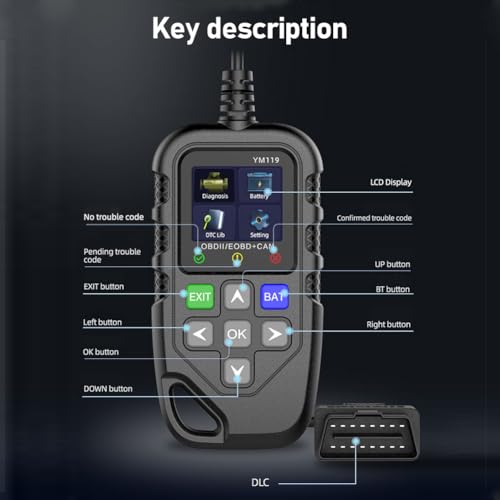
Unlike some scanners that require navigating through labyrinthine menus, this tool features a straightforward five-button layout: Up, Down, Enter, Esc, and a dedicated “I/M” button for emission readiness checks. Even my 67-year-old father, who describes himself as “technologically challenged,” figured out the basic functions within five minutes without consulting the manual.
The color-coded display uses red for critical issues, yellow for warnings, and green for normal readings—making interpretation quick and


Related products
















Reviews
There are no reviews yet.