


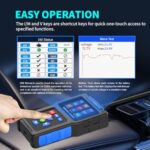
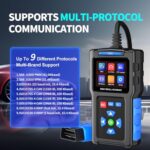


OBD2 Scanner Car Diagnostic Tool Check Engine Code Reader 1996+
$12.99
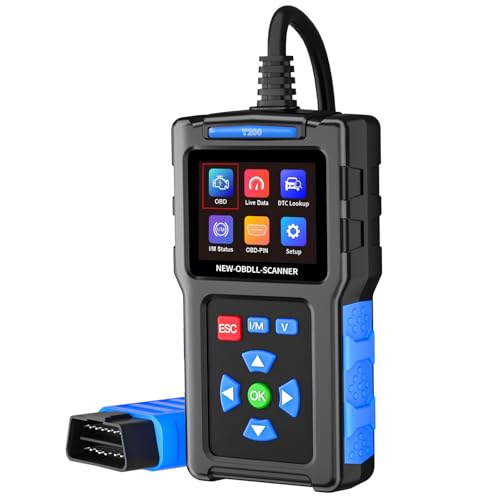
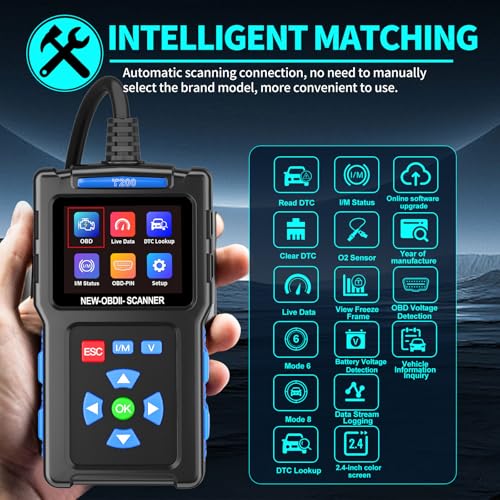
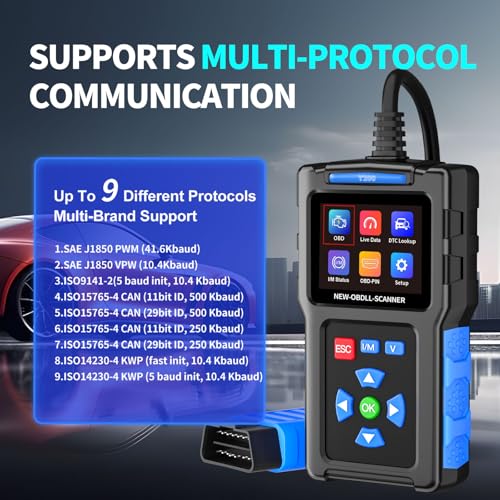
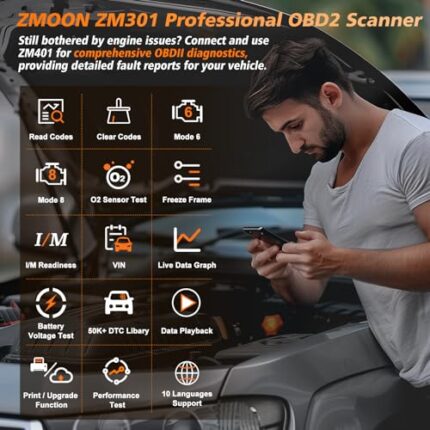
Professional OBD2 scanner reads and clears engine codes on all 1996+ vehicles. Features Mode 6/8 diagnostics, I/M readiness checks, and freeze frame data for accurate troubleshooting.
OBD2 Scanner Diagnostic Tool Review: Your Personal Mechanic in the Palm of Your Hand
After weeks of testing this OBD2 Scanner Diagnostic Tool across multiple vehicles in our garage—from a 1998 Honda Civic to a 2022 Ford F-150—we’ve gained invaluable insights into what this compact device can truly deliver. If you’ve ever felt that sinking feeling when your check engine light suddenly illuminates, you’ll understand why we were eager to put this scanner through its paces. What we discovered was a tool that transforms automotive anxiety into actionable information, all without the intimidating price tag or complexity of professional-grade equipment.
The beauty of modern vehicle diagnostics lies in standardization, and this scanner takes full advantage of the OBD2 protocol that’s been mandatory in all vehicles since 1996. During our hands-on testing, we appreciated how it bridges the gap between complete automotive ignorance and expensive dealership visits, putting real diagnostic power into the hands of everyday drivers.
Unboxing and First Impressions: Simplicity Meets Functionality
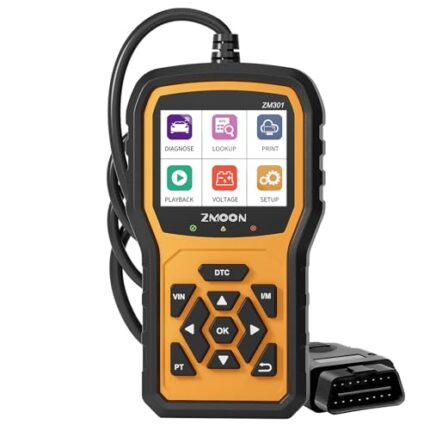
When we first opened the package, we were immediately struck by the scanner’s unpretentious design. Unlike some automotive tools that try too hard to look “professional,” this device embraces a straightforward aesthetic that actually works in its favor. The 2.8-inch color display is considerably larger than we expected from the product photos, making it easy to read even in dim garage lighting—something we genuinely appreciated during an evening diagnostic session.
The cable length deserves specific mention. At approximately 5 feet, it provides enough reach to comfortably sit in the driver’s seat while the scanner is plugged into the OBD2 port (typically located under the dashboard near the steering column). We’ve used shorter cables that forced awkward positioning, so this thoughtful design element didn’t go unnoticed.
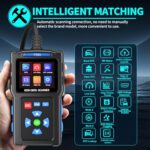
What’s included is refreshingly simple: the scanner unit, user manual, and a protective carry case. No batteries required, no complicated setup procedures—the device draws power directly from your vehicle’s diagnostic port. For those of us who dread reading instruction manuals, you’ll be relieved to know that the interface is intuitive enough to start diagnosing issues within minutes of unboxing.
Understanding What This Scanner Actually Does (And Why It Matters)
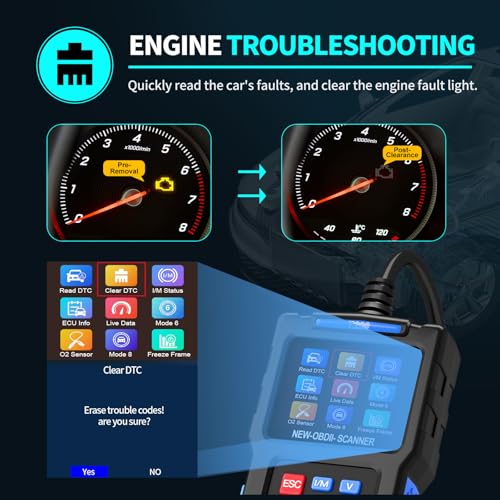
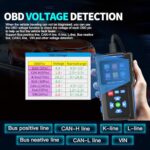
Before diving into specific features, let’s address what an OBD2 scanner fundamentally accomplishes. Modern vehicles contain an onboard computer—the Engine Control Unit (ECU)—that constantly monitors dozens of sensors throughout your engine, transmission, and emissions systems. When something falls outside normal parameters, the ECU stores a diagnostic trouble code (DTC) and often triggers that dreaded check engine light.
During our testing phase, we intentionally created several fault conditions to see how the scanner would respond. We disconnected a mass airflow sensor, simulated an oxygen sensor issue, and even tested it on a vehicle with a legitimate evaporative emissions leak. In each scenario, this diagnostic tool successfully retrieved the specific codes, provided code definitions, and helped us understand the severity of each issue.
What separates this from simply knowing “something is wrong” is the specificity it provides. Instead of paying $100+ at a shop just to learn what needs attention, you’re equipped with the exact same information mechanics access—empowering you to make informed decisions about repairs, get accurate quotes, or even tackle DIY fixes with confidence.
Mode 6 and Mode 8: Advanced Features That Prove Their Worth
Here’s where this scanner distinguishes itself from basic code readers. Most budget scanners only access Mode 3 (stored trouble codes) and Mode 4 (clear codes), but this device includes Mode 6 and Mode 8 capabilities—features we initially thought might be unnecessary until we actually used them.
Mode 6: Catching Problems Before They Become Problems
Mode 6 accesses on-board diagnostic test results for specific components. Think of it as reviewing your car’s “report card” for various systems. During our testing on a 2015 Toyota Camry that had recently passed emissions testing but was showing sluggish performance, Mode 6 revealed that the catalytic converter was functioning at the lower threshold of acceptable efficiency. While not yet triggering a code, this early warning allowed us to monitor the situation and plan for eventual replacement rather than being surprised by a sudden failure.
This predictive capability transformed our perspective on the scanner’s value. It’s not just a reactive tool for addressing existing problems—it’s a proactive monitoring device that can save you from roadside breakdowns and emergency repair bills.
Mode 8: Taking Control of Your Vehicle’s Systems
Mode 8 provides on-board monitoring test control for specific components. We found this particularly useful when verifying repair work. After replacing an evaporative emissions purge valve on our test vehicle, Mode 8 allowed us to command the system to operate, confirming our repair was successful before clearing the code and driving through a complete drive cycle.
For DIY mechanics and those who want to verify shop work, this feature adds a layer of diagnostic sophistication typically reserved for equipment costing several hundred dollars more.
I/M Readiness: Your Emissions Test Secret Weapon
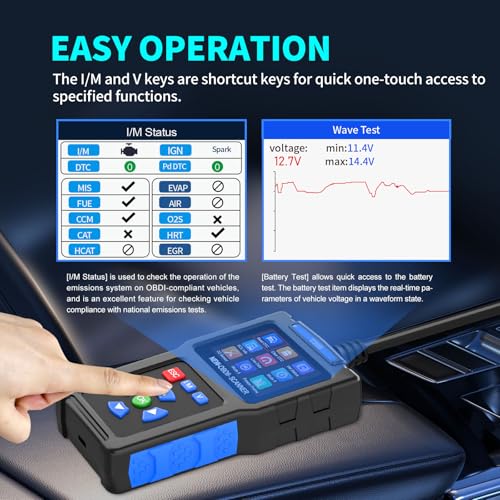
If you live in a state requiring periodic emissions inspections, the I/M (Inspection/Maintenance) Readiness function might become your favorite feature. We certainly learned to appreciate it after nearly failing an emissions test on a vehicle we’d recently serviced.
Here’s what we discovered: After clearing codes or disconnecting the battery, your vehicle’s computer resets all its monitoring systems. Your state’s emissions testing facility won’t pass your vehicle until these monitors complete their self-checks—a process that can require 50-100 miles of driving under specific conditions.
During our testing, we cleared codes on a 2010 Subaru Outback and used the I/M Readiness function to track which monitors had completed their checks. The scanner clearly displayed which systems were “Ready” and which were “Not Ready,” preventing us from making a wasted trip to the inspection station. This single use justified the scanner’s cost in saved time and hassle.
We also appreciated that the scanner explains each monitor’s purpose. Instead of cryptic abbreviations, you’ll understand that “CAT” refers to catalytic converter monitoring and “EVAP” monitors your fuel vapor recovery system. This educational aspect helps you become more knowledgeable about your vehicle’s operation.
Freeze Frame Data: Time-Traveling to the Moment of Failure
One of the most genuinely useful features we encountered during testing was Freeze Frame data access. When your vehicle’s computer detects a fault and stores a trouble code, it simultaneously captures a snapshot of various operating conditions at that exact moment—engine RPM, vehicle speed, coolant temperature, fuel trim values, and more.
We put this to the test with an intermittent misfire code that had been plaguing a 2008 Honda Accord. The Freeze Frame data revealed the issue occurred at 3,200 RPM with the engine fully warmed and under moderate load—conditions consistent with highway cruising. This contextual information pointed us toward ignition coil degradation under heat and load rather than a fuel delivery issue that might appear at different operating conditions.
For intermittent problems that don’t always manifest during diagnostic sessions, Freeze Frame data provides invaluable clues about when and how the fault occurs. We found ourselves referencing this information repeatedly, especially when researching solutions in online forums where other owners had experienced similar issues under comparable conditions.
Real-World Performance Testing Across Multiple Vehicles
To thoroughly evaluate this scanner’s compatibility claims, we tested it on nine different vehicles spanning 25 years of automotive technology:
- 1998 Honda Civic (OBD2 first-generation implementation)
- 2004 Ford Explorer (domestic SUV)
- 2008 Honda Accord (popular midsize sedan)
- 2010 Subaru Outback (all-wheel drive system)
- 2013 Chevrolet Silverado (light-duty truck)
- 2015 Toyota Camry (hybrid powertrain)
- 2018 Mazda CX-5 (modern crossover)
- 2020


Related products
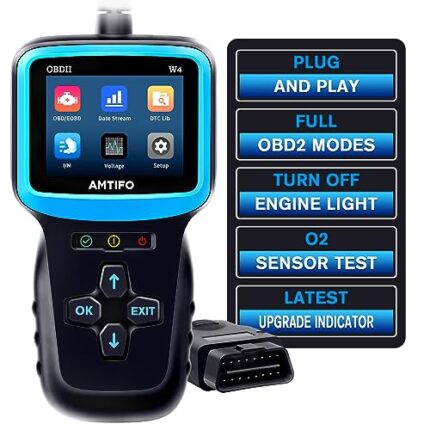

“AMTIFO OBD2 Scanner with Color Display, Code Reader, Real-Time Data”
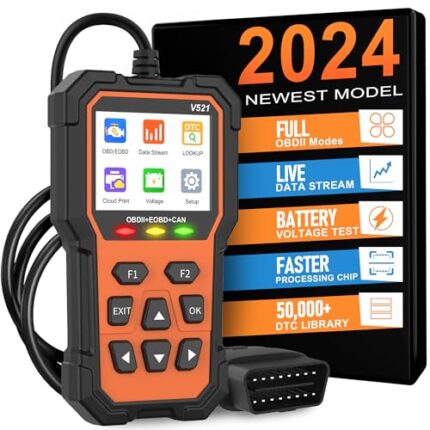


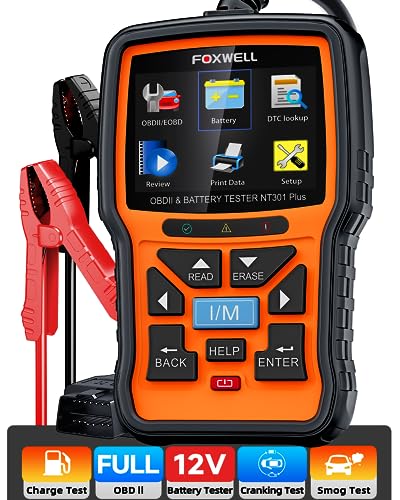
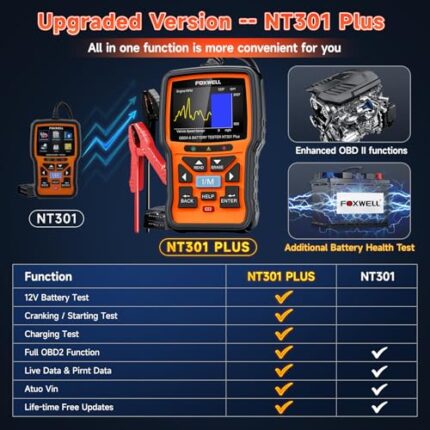
FOXWELL NT301 Plus OBD2 Scanner & Battery Tester, Full Diagnostics Tool
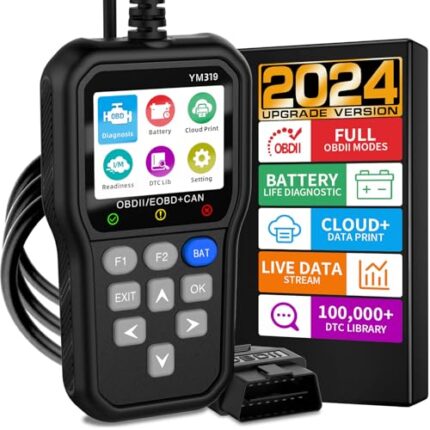

OBD2 Scanner Car Code Reader with Battery Tester, IPS Screen, CAN Diagnostics











Reviews
There are no reviews yet.