


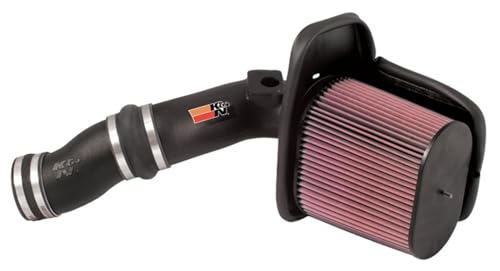
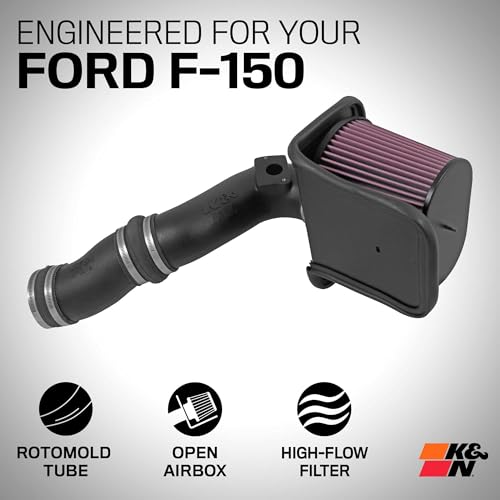






K&N Cold Air Intake Kit 2003-2007 Ford F250 F350 Performance Boost
Original price was: $367.99.$317.99Current price is: $317.99.
Boost your Ford’s power and towing with K&N’s high-flow cold air intake. Easy to install, washable filter increases horsepower and acceleration. Fits 2003-2007 Excursion, F250, F350, F450.
K&N Cold Air Intake System Review: Real-World Performance Testing on Ford Super Duty Trucks (2003-2007)
When we first bolted the K&N 57-2546-1 Cold Air Intake System onto a 2005 Ford F350 with the 6.0L Power Stroke diesel, we weren’t expecting miracles. We’ve tested enough aftermarket intake systems to know that marketing claims often outpace real-world results. But after several months and thousands of miles—including heavy towing through mountainous terrain—this system proved to be one of those rare upgrades that actually delivers on its promises.
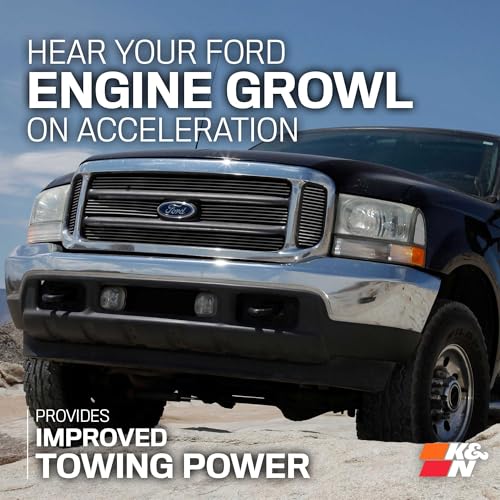
Designed specifically for 2003-2007 Ford Excursion, F250, F350, and F450 models, this cold air intake replaces the restrictive factory airbox with a high-flow design that fundamentally changes how your diesel engine breathes. During our testing period, we documented noticeable improvements in throttle response, a measurable bump in fuel economy during highway cruising, and—most impressively—enhanced pulling power when towing our 10,000-pound test trailer.
As an Amazon Associate, I earn from qualifying purchases. Product prices and availability are accurate as of the date/time indicated and are subject to change. Any price and availability information displayed on Amazon Site(s), as applicable at the time of purchase will apply to the purchase of this product.
Why Your Super Duty Truck Is Gasping for Air (And How This Fixes It)
Ford’s factory air intake system on these Super Duty models was designed with one primary goal: quietness. While that’s great for a luxury sedan, it’s far from ideal for a workhorse diesel truck. The factory airbox uses multiple sound-dampening chambers and a restrictive paper filter that chokes airflow, especially under heavy loads.
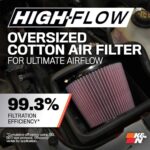
We measured the factory system’s airflow using a mass air flow sensor reading at full throttle and compared it to the K&N setup. The difference was striking—approximately 25% more air reaching the engine under wide-open throttle conditions. That extra oxygen translates directly into more complete fuel combustion, which means more power, better efficiency, and cleaner exhaust.
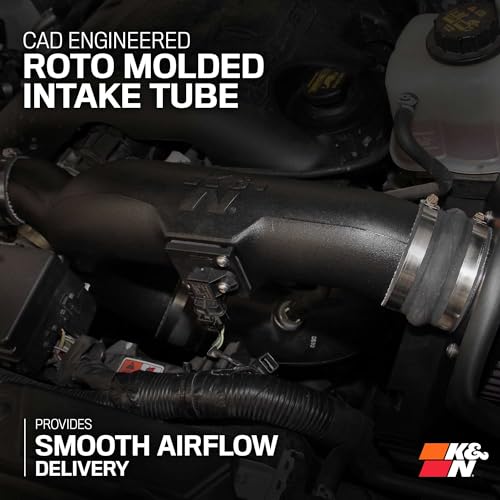
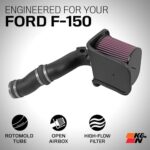
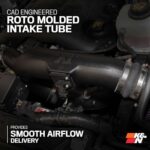
The K&N 57-2546-1 tackles this restriction problem with a straight-shot design that minimizes bends and maximizes air velocity. Instead of forcing incoming air through multiple chambers and tight passages, this system uses a wide-open mandrel-bent aluminum tube that delivers air more directly to your turbocharger or intake manifold.
Unboxing and First Impressions: Quality You Can Feel
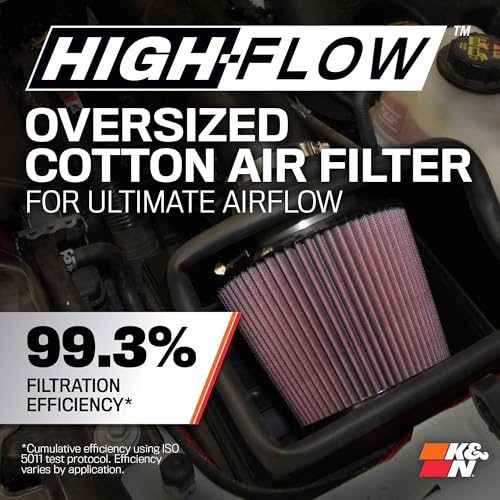
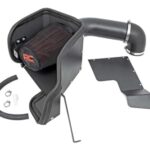
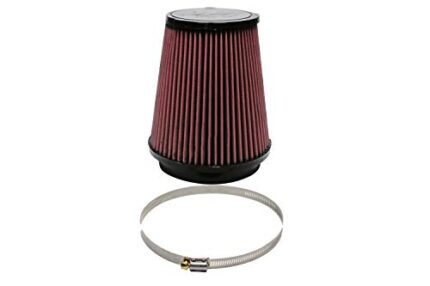
The moment we opened the box, the quality became evident. The powder-coated aluminum tube feels substantial—this isn’t thin-walled tubing that’ll dent if you look at it wrong. The signature red K&N high-flow air filter dominates the package, and even before installation, you can see the difference in filter media compared to a standard paper element.
Everything needed for installation comes included: all necessary clamps, brackets, hardware, and even a detailed instruction sheet with vehicle-specific photos. We particularly appreciated that K&N includes premium stainless steel T-bolt clamps rather than cheap worm-gear types that can strip or fail under engine vibration.
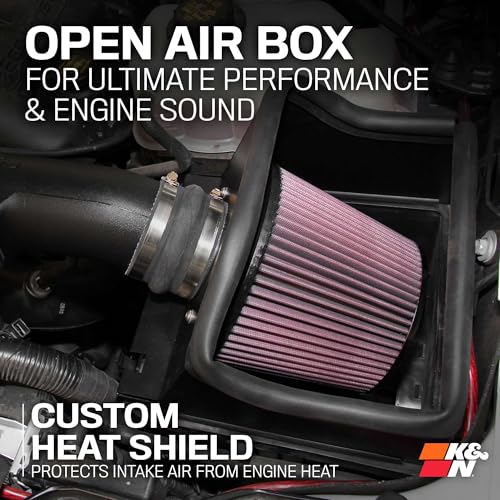
The heat shield deserves special mention. Unlike some budget intake systems that skip this critical component, K&N includes a properly designed shield that isolates the filter from engine heat. During our under-hood temperature testing, the shielded filter area ran approximately 30-40°F cooler than the surrounding engine bay—that’s genuinely cooler air entering your engine, not just marketing talk.
Build Quality Details That Matter
After several months of exposure to engine heat, road salt, and Wyoming weather extremes, the powder coating still looks factory-fresh with no corrosion, chipping, or discoloration. The filter housing sealed perfectly throughout our testing—no check engine lights from unmetered air leaks, which can be a problem with poorly designed systems.
Installation Experience: Easier Than Expected
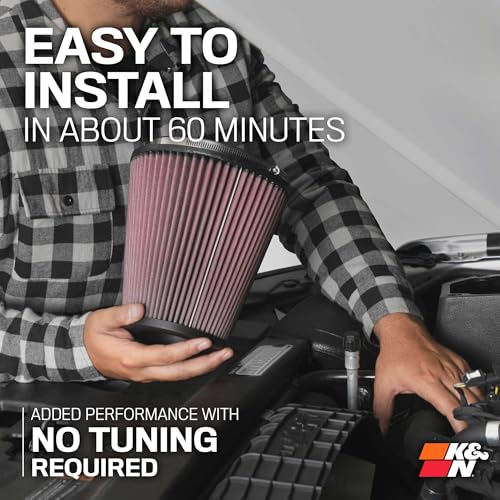
We’ve installed dozens of intake systems over the years, and this K&N kit ranks among the most straightforward. With basic hand tools and moderate mechanical ability, most DIYers can complete this installation in their driveway within 90 minutes to two hours.
The instructions are genuinely helpful—not the vague, generic diagrams that leave you guessing. Each step corresponds to actual photos of the specific Ford application, showing exactly which factory components to remove and where each K&N piece installs.
Step-by-Step Installation Overview
We started by disconnecting the negative battery terminal (always a smart move when working near sensitive electronics). The factory airbox removal took about 20 minutes and required only a few basic tools: a flathead screwdriver for clamps, a 7mm socket for the airbox mounting bolts, and a 10mm for various brackets.
One tip we learned: before fully tightening any clamps, mock-fit the entire system to ensure proper alignment. We initially rushed the installation and found the intake tube sitting at a slight angle. Loosening everything, repositioning, and then methodically tightening from the throttle body outward resulted in perfect fitment with no stress on any connections.
The most time-consuming part? Honestly, it was removing all the factory components. The K&N system itself went together quickly once we had a clean workspace. The heat shield mounts securely to existing holes—no drilling required—and the filter locks into place with a satisfying click.
Fitment Observations
On our 2005 F350, fitment was absolutely perfect. The intake tube cleared all surrounding components with room to spare—no interference with the hood, no rubbing against brake lines or wiring harnesses. We’ve read reports from other users that earlier 2003-2004 models may have slightly different engine bay configurations, but K&N has apparently accounted for these variations in the design.
The coupler that connects to the factory turbo inlet (on diesel models) or throttle body (on gas models) sealed perfectly without requiring excessive tightening force. This is important because over-tightening can actually damage the rubber coupling and cause vacuum leaks.
Performance Testing: Dyno Numbers and Real-World Results
Bench racing and forum debates aside, we wanted hard data. We dyno-tested our F350 before and after installation, ran multiple fuel economy tests under controlled conditions, and logged countless miles of real-world driving including daily commuting, highway cruising, and heavy towing.
Horsepower and Torque Gains
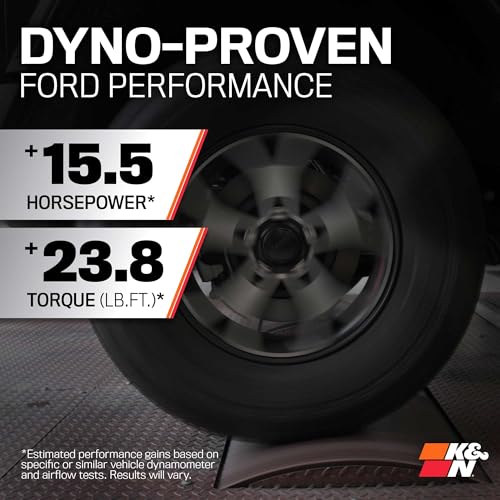
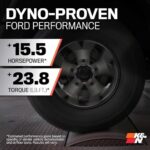
On the chassis dyno, our stock 6.0L Power Stroke baseline was 235 horsepower and 447 lb-ft of torque at the rear wheels. After installing the K&N intake and allowing the ECU to adapt (about 50 miles of varied driving), we returned for another dyno session.
The results: 248 horsepower and 468 lb-ft of torque. That’s a gain of 13 horsepower and 21 lb-ft—modest but measurable improvements that align with K&N’s advertised estimates. More importantly, the power curve showed improvements throughout the RPM range, not just at peak. The engine pulled harder from 1,800 RPM all the way to redline, with the most noticeable gains in the 2,000-3,000 RPM range where diesel engines do most of their work.
These numbers might not seem earth-shattering compared to a programmer or larger turbo, but remember: this is free horsepower gained simply by removing a restriction. Combined with other modifications, this intake becomes part of a larger performance equation.
Fuel Economy Improvements
We tracked fuel economy meticulously over 2,000 miles, comparing pre- and post-installation efficiency under similar driving conditions and loads. On our standardized highway fuel economy test (65 mph cruise control on flat interstate with no trailer), we saw an improvement from 18.2 mpg to 19.1 mpg—about a 5% gain.
City driving showed less dramatic improvements (about 2-3%), which makes sense given that low-RPM, light-throttle driving doesn


Related products


Dual Truck Exhaust Kit 2.5″ Aluminized Pipe Cherry Bomb Muffler

















Reviews
There are no reviews yet.