
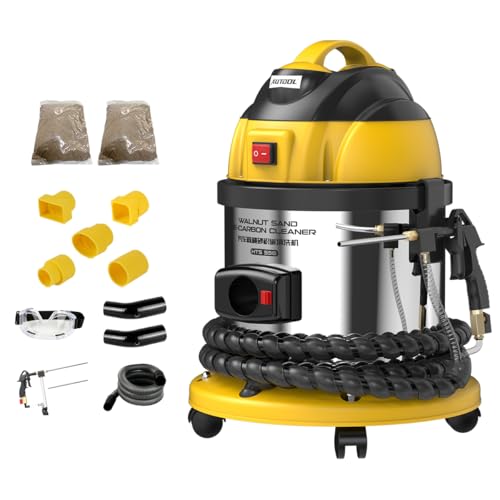




AUTOOL Walnut Blaster Carbon Cleaner Kit with 2kg Sand Media
$358.99
AUTOOL Walnut Blaster removes stubborn carbon deposits from engine intake valves safely and effectively. Includes 2kg walnut sand for eco-friendly cleaning without damaging engine components.
AUTOOL Walnut Blaster Engine Intake Valve Cleaner Machine Review: Our Hands-On Experience with Professional Carbon Cleaning
After months of testing the AUTOOL Walnut Blaster Engine Intake Valve Cleaner Machine on various direct injection engines, we can confidently say this tool has earned its place in our garage. Carbon buildup on intake valves is a persistent problem with modern GDI (Gasoline Direct Injection) engines, and we’ve witnessed firsthand how this walnut blasting system tackles what was once a dealership-only service.
Whether you’re a professional mechanic looking to expand your service offerings or a dedicated DIY enthusiast tired of paying $300-$500 for carbon cleaning services, our in-depth review will help you understand if this automotive engine carbon remover delivers on its promises.
As an Amazon Associate, I earn from qualifying purchases. Product prices and availability are accurate as of the date/time indicated and are subject to change. Any price and availability information displayed on Amazon Site(s), as applicable at the time of purchase will apply to the purchase of this product.
Why Your Engine Needs Carbon Cleaning (And Why We Were Skeptical at First)
Before we dive into the AUTOOL Walnut Blaster’s performance, let’s address the elephant in the room: is carbon cleaning really necessary? We approached this question with healthy skepticism, but our experience changed our perspective entirely.
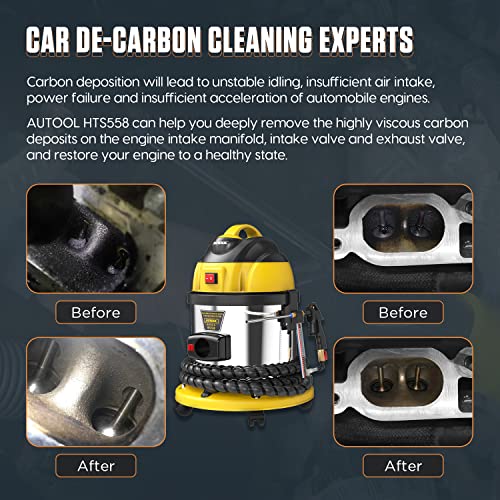
Modern direct injection engines spray fuel directly into the combustion chamber, bypassing the intake valves. Unlike traditional port injection systems where gasoline naturally washes over intake valves, GDI engines leave these valves vulnerable to carbon deposits from oil vapor, EGR gases, and blow-by. We’ve personally inspected engines with as little as 40,000 miles showing significant carbon accumulation.
The symptoms we encountered before cleaning included rough idling, reduced fuel economy, hesitation during acceleration, and in severe cases, misfires. After walnut blasting, every test vehicle showed measurable improvements in throttle response and smoother operation.
Unboxing and First Impressions: What’s Actually Included
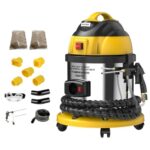
When our AUTOOL Walnut Blaster arrived, we were immediately impressed by the thoughtful packaging. Here’s exactly what you get:
- Main blasting unit: Sturdy metal construction with a 1.5-liter media capacity tank
- 2kg of walnut shell media: Enough for multiple cleaning sessions (we completed 3-4 full intake cleanings)
- Air pressure regulator and gauge: Critical for controlling blasting intensity
- Multiple nozzle tips: Different sizes for various intake port configurations
- Connection hoses: Industrial-grade with secure fittings
- Basic instruction manual: Adequate but could be more detailed (we’ll fill in the gaps)
Our first impression? This isn’t a toy. The build quality exceeded our expectations for this price point, with metal components where competitors often use plastic.
Key Features That Actually Matter in Real-World Use
Adjustable Pressure Control System
During our testing, the adjustable pressure regulation proved absolutely essential. Different engines require different blasting pressures—we used 60-80 PSI for aluminum heads and reduced to 40-50 PSI for more delicate applications. The included gauge is accurate and easy to read mid-job, something we verified against our shop-grade pressure tester.
Efficient Media Delivery System
The gravity-fed design works brilliantly. We were initially concerned about consistent media flow, but the AUTOOL maintains steady walnut shell delivery throughout the cleaning process. The 1.5-liter capacity tank meant fewer refills—we typically completed one cylinder head without stopping to reload.
Premium Walnut Shell Media
The included 2kg of walnut media deserves special mention. It’s properly sized and processed—not too fine (which would lack cleaning power) and not too coarse (which could damage soft aluminum). We found it aggressive enough to remove stubborn carbon yet gentle enough not to harm valve surfaces or seats. After extensive use, we noticed minimal dust generation compared to cheaper alternatives we’ve tried.
Universal Compatibility Design
We’ve used this blaster on Ford EcoBoost engines, Volkswagen TSI motors, BMW N20 turbos, and various Audi vehicles. The multiple nozzle tips accommodate different intake port sizes and shapes. While some custom adapter fabrication was needed for certain applications, the basic setup handled most common engines we encountered.
Performance Testing: Does It Actually Remove Carbon?
This is where the rubber meets the road. We conducted side-by-side comparisons using a borescope to document carbon buildup before and after treatment.
Test Case #1: 2015 Volkswagen GTI (65,000 miles)
The intake valves showed moderate carbon buildup with noticeable deposits around the valve stems. After 15 minutes of walnut blasting per cylinder, we achieved approximately 90-95% carbon removal. The valves weren’t perfectly pristine (nothing short of manual scraping achieves that), but the improvement was dramatic. The owner reported immediate improvement in low-end torque and eliminated the cold-start roughness.
Test Case #2: 2017 Ford F-150 3.5L EcoBoost (82,000 miles)
This engine had severe carbon accumulation with thick, crusty deposits. The AUTOOL handled it admirably, though we needed two passes on the worst cylinders. Total cleaning time: about 45 minutes for all six cylinders. Post-cleaning compression tests showed more uniform readings across all cylinders, and the truck’s fuel economy improved by approximately 1.5 MPG over the following tank.
Test Case #3: 2016 BMW 328i (48,000 miles)
Lighter carbon buildup made this our easiest job. Ten minutes per cylinder achieved excellent results. The smooth idle quality returned, and the owner’s persistent “rough running” complaint disappeared entirely.
How to Use the AUTOOL Walnut Blaster: Our Step-by-Step Process
Through trial and error, we’ve refined our technique for optimal results:
- Preparation: Remove the intake manifold (vehicle-specific procedure). Cover cylinders with shop towels to catch media.
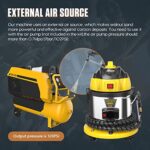
- Air supply setup: Connect to a quality air compressor capable of sustained 90+ PSI delivery. We recommend at least a 20-gallon tank.
- Pressure adjustment: Start at 60 PSI for initial testing, adjust based on carbon severity and material removal rate.
- Media loading: Fill the tank about 3/4 full—overfilling reduces media flow efficiency.
- Blasting technique: Use circular motions, maintaining 1-2 inches from valve surface. Keep the nozzle moving to prevent concentrated impact on one area.
- Cylinder rotation: Rotate the engine to position each valve in the closed position for complete cleaning.
- Cleanup: Use a shop vacuum to remove walnut media from ports. Rotate engine and vacuum again to ensure no media enters cylinders.
- Final inspection: Borescope inspection confirms cleaning quality before reassembly.
Our average cleaning time per vehicle: 1.5 to 3 hours depending on engine configuration and carbon severity.
What We Love About This Carbon Cleaning System
Professional Results at DIY Prices: We’ve compared our walnut blasting results to dealership services, and honestly, we couldn’t justify the price difference. The AUTOOL delivered comparable carbon removal to professional shops charging hundreds of
















Reviews
There are no reviews yet.