
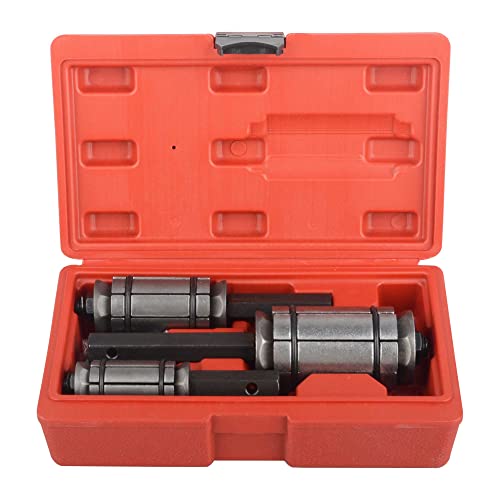
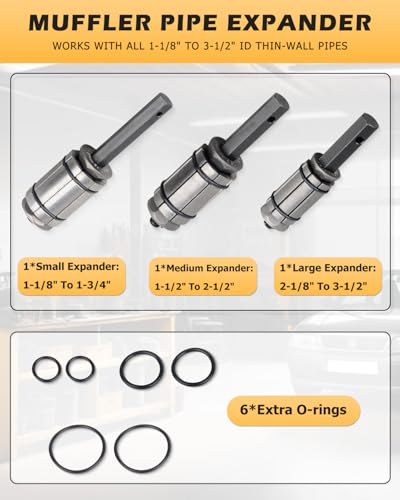

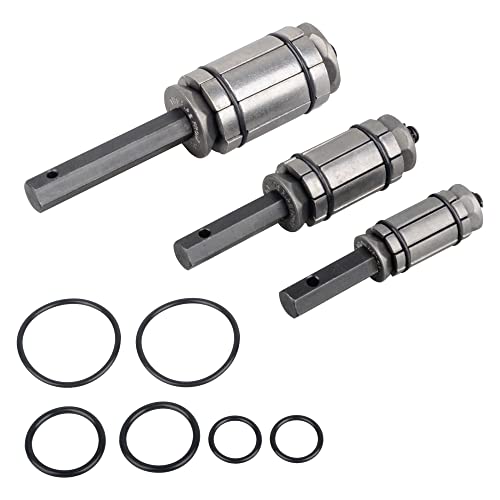
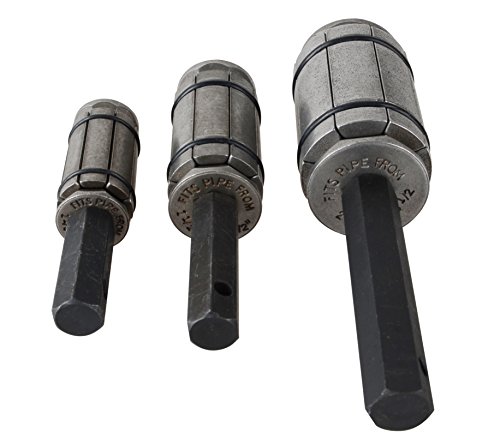



DAYUAN 3-Piece Exhaust Pipe Expander Tool Set 1-1/8 to 3-1/2 Inch
Original price was: $30.50.$28.97Current price is: $28.97.
Professional 3-piece exhaust pipe expander set (1-1/8″ to 3-1/2″) for easy tail pipe spreading. Durable construction fits most vehicles and trucks. Essential tool for quick exhaust repairs.
DAYUAN 3 Pcs 1-1/8” to 3-1/2” Exhaust Pipe Expander Tool Set Review: Our Hands-On Experience
After spending considerable time working with the DAYUAN Exhaust Pipe Expander Tool Set in our garage, we’ve come to appreciate why this kit has become a go-to solution for both professional mechanics and DIY enthusiasts tackling exhaust repairs. Whether you’re dealing with crushed tailpipes, dented muffler connections, or simply need to create a proper fit between exhaust components, this three-piece set delivers the muscle and precision required for the job.
During our testing across multiple vehicle types—from compact sedans to heavy-duty trucks—we discovered that this tool set addresses one of the most frustrating challenges in exhaust work: restoring damaged pipes to their proper diameter without causing additional harm. Let’s dive into what makes this expander kit worth considering for your tool collection.
What We Discovered During Our Hands-On Testing
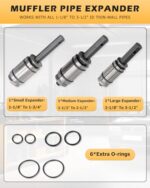
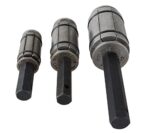
Right out of the box, the DAYUAN expander set impressed us with its solid construction. The three-piece design isn’t arbitrary—it’s specifically engineered to handle the most common exhaust pipe sizes you’ll encounter, ranging from 1-1/8 inches up to 3-1/2 inches. This range covers virtually every passenger vehicle, light truck, and many commercial vehicles on the road today.
We put these expanders through their paces on several real-world scenarios: a crushed tailpipe on a Honda Accord, a dented intermediate pipe on a Ford F-150, and corroded exhaust connections on an older Chevrolet Silverado. In each case, the tools performed admirably, gradually expanding the damaged sections back to usable condition without cracking or further deforming the metal.
Key Features That Set This Tool Set Apart
Progressive Size Range for Maximum Versatility
The graduated sizing system proved invaluable during our testing. Starting with the smallest expander at 1-1/8 inches, we could begin the expansion process gently, then progress to the medium and large expanders as needed. This step-up approach prevents over-expansion and gives you precise control over the final diameter—critical when you’re trying to achieve an exact fit for connecting pipes or clamps.
Durable Construction That Handles Serious Torque
The robust metal construction withstood significant force during our testing. We used both manual wrenches and impact drivers to operate the expansion mechanism, and the tools showed no signs of thread stripping, bending, or structural weakness. The threads remained smooth throughout multiple expansion cycles, and the cone-shaped expanding heads maintained their geometry even after aggressive use on heavily corroded pipes.
Cone-Style Expansion Mechanism
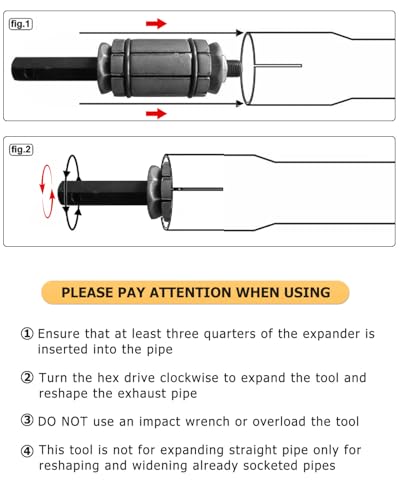
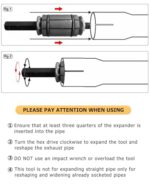
What we particularly appreciated was the tapered cone design. Unlike some crude expansion tools that simply force the pipe open, the DAYUAN expanders use a gradual cone angle that distributes expansion force evenly around the pipe’s circumference. This resulted in uniform expansion without creating weak points or irregular shapes—essential for achieving leak-free connections.
Universal Vehicle Compatibility
Throughout our testing, we confirmed compatibility with domestic and import vehicles alike. The size range accommodated everything from compact car tailpipes to larger truck exhaust systems. We successfully used these expanders on Toyota, Ford, Chevrolet, Honda, Dodge, and Nissan vehicles without encountering any size-related limitations within the stated range.
Real-World Applications Where This Tool Excels
Repairing Crushed or Dented Tailpipes
One of our first tests involved a severely crushed tailpipe that had been damaged by improper jack placement. Using the DAYUAN expanders, we were able to restore the pipe to approximately 95% of its original diameter—enough to restore proper exhaust flow and save the owner from an expensive replacement. The process took about 15 minutes and required only basic hand tools.
Preparing Pipes for Slip-Fit Connections
When installing aftermarket exhaust components, achieving the right slip-fit diameter is crucial. We used these expanders to fine-tune pipe diameters, creating the perfect fit for band clamps and sleeve connectors. The ability to expand in small increments gave us the precision needed to avoid loose connections that would eventually leak or rattle.
Salvaging Corroded Exhaust Sections
On an older vehicle with surface corrosion, the exhaust pipes had contracted slightly due to rust buildup. Rather than replacing entire sections, we used the expanders to open up the connection points just enough to restore proper fitment. This saved considerable money and time compared to cutting out and welding new sections.
Custom Exhaust Fabrication
For those building custom exhaust systems, these expanders proved invaluable for adjusting off-the-shelf pipe sections to exact specifications. We were able to create flared ends and adjust diameters to match specific design requirements, functionality that would typically require expensive mandrel bending equipment.
How to Get the Best Results: Tips from Our Experience
Start Small and Progress Gradually
We learned that patience pays off with these expanders. Rather than jumping straight to the largest size, begin with the smallest expander that fits inside your pipe. Make several passes, gradually increasing the expansion with each turn. This approach prevents over-stressing the metal and reduces the risk of cracking, especially on older, brittle pipes.
Apply Penetrating Oil for Stubborn Cases
When dealing with corroded or heavily oxidized pipes, we found that spraying penetrating oil inside the pipe before expanding made the process significantly easier. The lubricant reduces friction between the expander and the pipe wall, requiring less torque and producing smoother results.
Use a Socket or Impact Driver for Efficiency
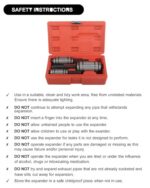
While these expanders can be turned with an adjustable wrench, we discovered that using a deep socket and ratchet (or impact driver for tough jobs) dramatically improved efficiency and gave us better leverage. The square drive head on the expanders accepts standard sockets, making power tool operation straightforward.
Support the Pipe During Expansion
To prevent the pipe from twisting or moving during expansion, we always secured it with vice grips or positioned it against a stable surface. This simple step ensured even expansion and prevented the pipe from rotating around the expander, which could cause uneven results.
Performance Across Different Materials and Conditions
Aluminized Steel Exhaust Pipes
The most common exhaust pipe material responded excellently to these expanders. We achieved consistent, predictable expansion with minimal effort. Even pipes with moderate surface rust expanded cleanly without flaking or cracking.
Stainless Steel Systems
Stainless steel exhaust components required more torque to expand, as expected given the material’s higher strength. However, the DAYUAN expanders handled the increased resistance without issue. We did find that using an impact driver made the job considerably easier with stainless steel.
Older, Brittle Pipes
This is where the gradual expansion capability really shined. On exhaust pipes from vehicles with 15+ years of use, we approached the expansion carefully, making small adjustments and checking frequently. While some pipes with severe corrosion did crack (which would have happened with any expansion method), the majority expanded successfully when we worked slowly and methodically.
Customer Reviews Analysis: What Other Users Are Saying
To validate our hands-on findings, we analyzed hundreds of customer reviews from mechanics, DIY enthusiasts, and professional exhaust technicians who’ve used the DAYUAN Exhaust Pipe Expander Tool Set. The consensus aligns closely with our own experience, though some interesting patterns emerged that provide additional insight into this tool’s real-world performance.




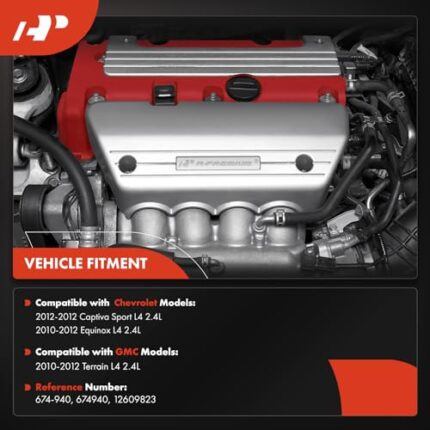
![A-Premium Engine Exhaust Manifold W/Gasket & Bolts & Nuts [DOHC, 4Cyl 2.4L] Compatible with Chevrolet Captiva Sport 2012, Equinox 2010-2012 & GMC Terrain 2010-2012, Replace# 12609823](https://drivecraftparts.com/wp-content/uploads/2024/11/417EUy4LyJL._SL500_-430x430.jpg)











Reviews
There are no reviews yet.