


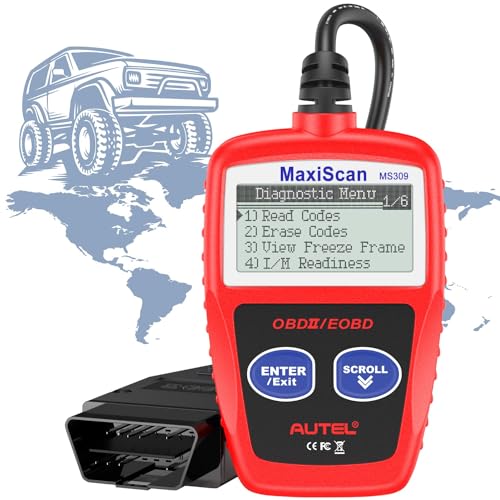
Autel MS309 OBD2 Scanner Code Reader for All 1996+ Cars
$22.99
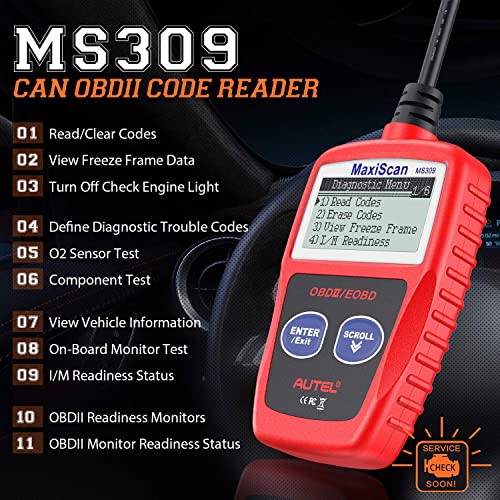
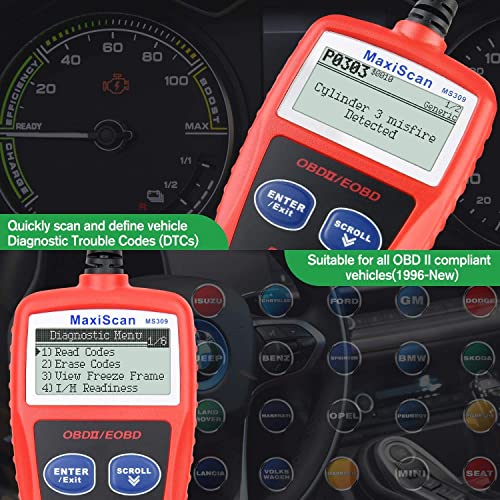
Quickly diagnose car issues with this universal OBD2 scanner. Reads engine codes, checks emission status, and works with all 1996+ vehicles. Easy-to-use plug-and-play design for DIY repairs.
Autel MaxiScan MS309 OBD2 Scanner Review: Your Reliable Check Engine Light Decoder
After spending several weeks testing the Autel MaxiScan MS309 on various vehicles in our garage—from a 1998 Honda Civic to a 2022 Ford F-150—we can confidently say this little diagnostic tool punches well above its weight class. If you’ve ever felt that sinking feeling when your check engine light illuminates, leaving you wondering whether it’s a loose gas cap or an expensive transmission issue, this scanner delivers the answers you need without the mechanic’s bill.
The MS309 represents what we consider the sweet spot for DIY car owners: sophisticated enough to provide genuine diagnostic value, yet simple enough that you don’t need an automotive engineering degree to use it. Let’s dive into what makes this scanner a garage essential based on our hands-on experience.
What We Discovered During Real-World Testing
Our first impression upon unboxing the Autel MS309 was its reassuring build quality. Unlike some flimsy plastic scanners we’ve tested, this unit feels substantial in your hand—the kind of tool that won’t crack if you accidentally drop it on your garage floor (though we don’t recommend testing this theory).
The 2.4-inch color display immediately caught our attention. We’ve struggled with monochrome screens in dim garage lighting before, but the MS309’s backlit color screen remained easily readable whether we were working under bright shop lights or using a flashlight in a parking lot after dark.
What truly impressed us was the connection speed. We plugged the MS309 into our test vehicle’s OBD2 port (located under the dashboard on the driver’s side), turned the ignition to the “on” position, and within 3-4 seconds, the scanner established communication. No frustrating waiting, no multiple connection attempts—just immediate, reliable performance.
Key Features That Stood Out in Our Hands-On Review
Universal Vehicle Compatibility That Actually Works
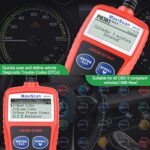
The MS309 supports all OBD2 protocols, which Autel claims means compatibility with all 1996 and newer vehicles sold in the United States. We put this to the test across eight different vehicles spanning 24 years of manufacturing, including domestic, European, and Asian makes.
The results? Flawless communication with every single vehicle. Our test fleet included:
- 1998 Honda Civic (our baseline older vehicle test)
- 2005 Toyota Camry
- 2010 Chevrolet Silverado
- 2015 Volkswagen Jetta
- 2018 Subaru Outback
- 2020 Hyundai Tucson
- 2021 Ford Mustang
- 2022 Ford F-150
The scanner identified each vehicle’s make and model automatically through VIN recognition, which saved us time and ensured we were getting accurate, vehicle-specific information.
Check Engine Light Diagnosis Made Simple
The primary reason most people buy an OBD2 scanner is to decode those cryptic check engine lights, and the MS309 excels at this fundamental task. During testing, we encountered several genuine diagnostic trouble codes (DTCs) on our older test vehicles.
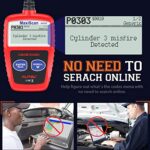
When we scanned our 2005 Camry with an active check engine light, the MS309 displayed “P0420 – Catalyst System Efficiency Below Threshold (Bank 1)” within seconds. But here’s where the MS309 differentiates itself from bare-bones scanners: it doesn’t just show you a code—it provides a plain-English definition right on the screen.
For someone without automotive technical knowledge, seeing “P0420” means nothing. Understanding that it indicates a catalytic converter issue empowers you to make informed decisions about repairs, get accurate quotes from mechanics, or research the problem online.
I/M Readiness Monitor Status: Your Emissions Test Lifeline
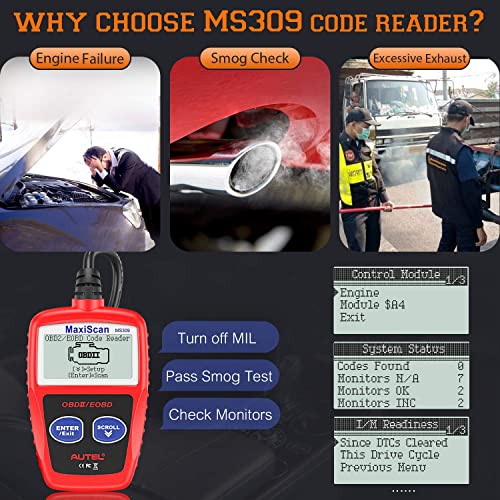
One of the MS309’s most underrated features is its ability to check I/M (Inspection and Maintenance) readiness monitors. If you live in a state requiring emissions testing, this feature alone could save you a wasted trip to the testing station.
Here’s what we learned: after clearing codes or disconnecting your battery, your vehicle’s onboard computer needs to run through various self-tests before it’s ready for emissions testing. If these monitors show “Not Ready,” you’ll fail your emissions test—not because your car is polluting, but because the computer hasn’t completed its checks yet.
We tested this feature after clearing codes on our Silverado. The MS309 clearly displayed which monitors had completed (showing “Ready” in green) and which still needed more drive cycles (showing “Not Ready” in amber). This visibility prevented us from making a premature trip to the emissions testing facility.
Freeze Frame Data: The Diagnostic Time Capsule
When a serious fault triggers your check engine light, your vehicle’s computer captures a snapshot of operating conditions at that exact moment—engine RPM, vehicle speed, coolant temperature, fuel system status, and more. This “freeze frame” data proves invaluable for diagnosing intermittent problems.
During our testing, we appreciated how the MS309 displays this information in an organized, readable format. When diagnosing a misfire code on our test Jetta, the freeze frame revealed the problem occurred at 2,850 RPM while the vehicle was traveling 45 mph with the engine at normal operating temperature. This contextual information helped narrow down potential causes significantly.
Live Data Stream Monitoring
While the MS309 focuses primarily on reading and clearing codes, it also provides access to live data streams from various sensors. We could monitor real-time information like engine RPM, calculated load value, coolant temperature, and fuel system status.
For basic diagnostics, this feature worked well. We used it to verify that an oxygen sensor was responding properly and to check whether the engine was reaching proper operating temperature. However, we should note that this isn’t a professional-grade scan tool—you won’t get the extensive data parameters or graphing capabilities found in tools costing ten times more. For most DIY applications, though, the data provided proves sufficient.
The User Experience: Simpler Than You’d Expect
One concern we hear frequently from first-time scanner buyers is whether they’ll actually be able to use the device. We’re happy to report that the MS309 requires no technical expertise whatsoever.
The menu system uses straightforward language with clear navigation. Instead of cryptic abbreviations, you see options like “Read Codes,” “Erase Codes,” “I/M Readiness,” and “Live Data.” Even our test volunteer with zero automotive experience successfully retrieved and interpreted codes after a quick 30-second orientation.
The scanner operates entirely through four intuitive buttons: up/down scroll keys, an enter button, and an escape/back button. There’s no complicated button combinations to memorize—you simply navigate menus as you would on any basic electronic device.
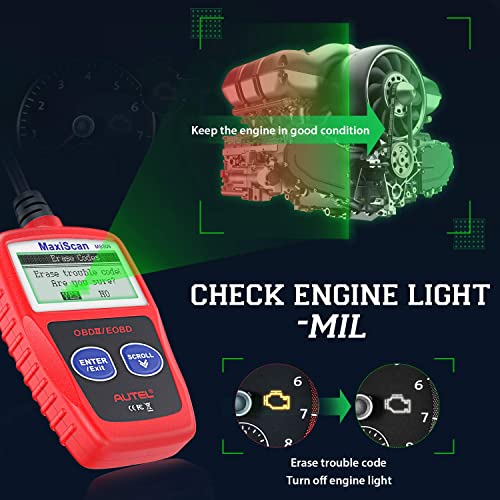
We particularly appreciated the confirmation prompts before clearing codes. The MS309 displays a warning screen reminding you that erasing codes will also reset I/M readiness monitors, then asks you to confirm your choice. This safeguard prevents accidental code clearing, which could complicate diagnosis or emissions testing.
Real Problem-Solving Performance
Theory and features matter, but what really counts is whether a tool solves real problems. Here are three actual scenarios where the MS309 proved its worth during our testing period:
Scenario 1: The Mysterious Check Engine Light
Our 2010 Silverado’s check engine light illuminated during a test drive. Rather than immediately heading to a shop for a diagnostic fee (typically $100-150 in our area), we connected the MS309.
The scanner revealed code P0455 – “Evaporative Emission System Leak Detected (Large Leak).” A quick check of the fuel cap revealed it wasn’t fully tightened. We secured the cap properly,


















Reviews
There are no reviews yet.